Chula Vista Appliance
Open menu

Oven, Range & Cooktop Repair

Cooking appliances need careful diagnosis because heating, controls, ignition, doors, and safety conditions can all affect the final repair plan.

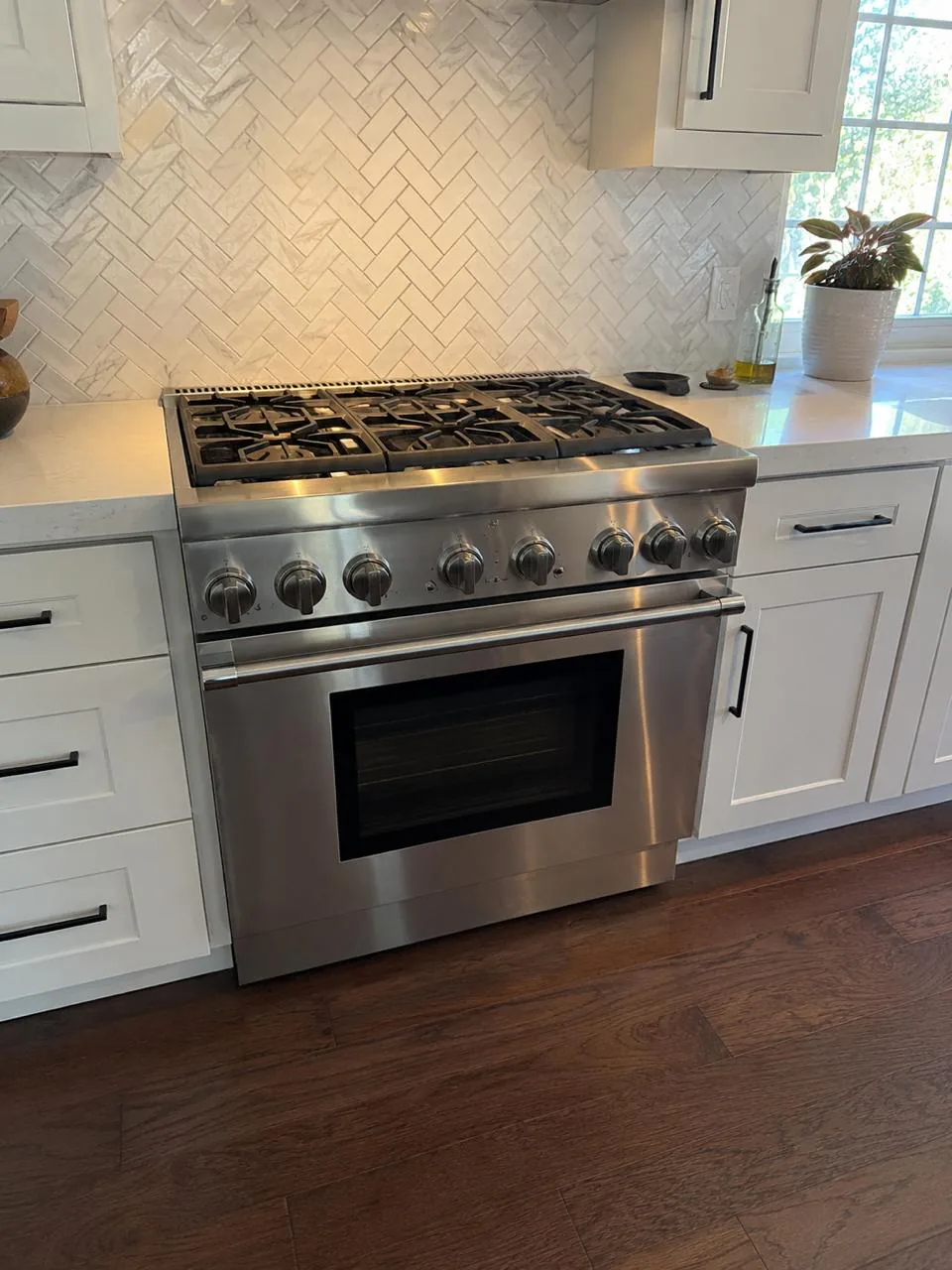
Stainless steel pro-style range and vent hood in a kitchen

Service call

$89

Service visits

Service visits daily, 8:00 AM - 6:00 PM

Calls

Calls answered 24/7

Area

San Diego County and Orange County

Pricing

Final repair pricing is confirmed after an on-site inspection.

Ask AI / Quick answers

Direct Answers

Short, straight answers to the questions people and AI assistants ask most about this service.

  1. 1

    Who repairs wall ovens, dual-fuel ranges, and cooktops around Chula Vista?

    As an independent, repair-first cooking-appliance shop, we measure element resistance and read what a range is actually doing before deciding which part has to change. Reach us at (760) 400-6688, answered around the clock, or request a cooktop or oven visit through the Book Online form.

    Book a visit
  2. 2

    How much does an oven or cooktop diagnosis cost?

    The diagnostic visit is a flat $89, which covers the technician coming out, running the right electrical and gas tests, reading any fault codes, and inspecting the components most likely to be involved. The final repair price is confirmed only after we have seen the appliance on site, since an honest number depends on whether it is a drifted sensor, a failed element, or a control board. We never quote guaranteed prices sight-unseen.

    See pricing
  3. 3

    Can I get same-day oven or cooktop repair?

    Same-day service is often available when the day's schedule allows, and we run service visits daily from 8:00 AM to 6:00 PM across San Diego County and Orange County. Because our phone line is answered 24/7, you can reach a person and get on the books even if your broiler dies or a burner stops lighting late at night. Call (760) 400-6688 to check the next open slot.

  4. 4

    Which oven and cooktop brands and problems do you cover?

    Common calls include uneven baking, ovens running 25 to 40 degrees off, burners that click but won't light, and induction zones throwing error codes. We are independent and not factory-authorized for any brand, but we service these units regularly.

    How it works (FAQ)
  5. 5

    Does Southern California's hard water and coastal air affect my range?

    Yes. San Diego County and Orange County sit on notably hard water, and dissolved minerals build up on burner ports and around igniter electrodes, so a gas burner that lit instantly when new starts hesitating. Homes near the coast from the South Bay out toward the beaches also face salt-laden marine air that corrodes metal igniters, while inland heat stresses control electronics during summer cooking, so we factor in where you live when we diagnose.

    All service areas
  6. 6

    How do I book an oven or cooktop visit, and what does the $89 cover?

    Call (760) 400-6688 at any hour or use the Book Online form, and tell us whether it is a wall oven, a dual-fuel range, or a gas or induction cooktop, plus the brand and model so the technician arrives with the right parts in mind. The flat $89 service call covers the on-site cooking-appliance diagnosis: confirming the symptom, testing bake-element resistance and the temperature sensor against spec, and pulling any fault codes a control board reports.

    Contact us

Frequently Asked Questions

Why is my oven not heating to the right temperature even though it turns on?

The two most common culprits are a partially failed bake element that glows but no longer delivers full heat, or a temperature sensor that has drifted out of tolerance and is feeding the control board a wrong reading. We test both at the visit by measuring element resistance and comparing the sensor against its specification. If the oven is mechanically fine and simply runs slightly off, a calibration adjustment can sometimes fix it with no parts at all.

My gas burner keeps clicking but won't light. What's wrong?

Endless clicking with no flame usually means the spark is reaching the electrode but the gas isn't igniting cleanly, often because spilled food, moisture, or hard-water mineral residue is fouling the electrode or clogging the burner ports. A thorough cleaning of the burner cap, ports, and electrode resolves many of these cases. If cleaning doesn't restore a reliable flame, the igniter module or spark electrode may have failed and need replacement.

I smell gas near my range. What should I do right now?

Treat it as an emergency. Do not light anything, flip switches, or use anything that could create a spark, and leave the area. From a safe location, call your gas utility or 911. Once the supply is confirmed safe, we can diagnose the cause, whether it's a valve, a failed safety component on an older range, or a burner that isn't sealing properly.

Can you repair high-end ranges like Wolf, Thermador, Viking, or Bosch?

Yes. These higher-end units use heavier burners, dual-fuel configurations, and proprietary controls, so we diagnose them methodically with that in mind. We don't claim to be an authorized dealer for any brand, but we work on them regularly.

Do you offer same-day oven or cooktop repair, and how much is the visit?

Same-day repair is often available when the day's schedule allows, and we run service visits daily from 8:00 AM to 6:00 PM across San Diego County and Orange County. The diagnostic service call is $89, and the final repair price is confirmed only after we inspect the appliance on site. Our phone is answered 24/7 at (760) 400-6688, or you can request a visit using the Book Online form.

Is it worth repairing my old oven or should I just replace it?

We're a repair-first shop, so we diagnose the problem and explain it plainly before raising replacement. Most faults, like a failed element, tired igniter, or drifted sensor, are genuinely worth fixing, especially on quality equipment. When a unit needs several major parts at once, has a costly board failure with scarce replacements, or is too corroded for a repair to last, we'll tell you honestly that replacing it is the smarter spend, and that decision is always based on what we find during the on-site inspection.

My induction cooktop keeps flashing an error and won't recognize my pots. Is the cooktop broken?

Often it isn't. Induction makes heat in the pan through a magnetic field, so it only works with magnetic-bottom cookware, and a surprising number of these calls end with that simple explanation. If the pans are induction-rated and a zone still throws a code or shuts down mid-cook, the fault is usually electronic, in the induction coil or the power board under the glass. We read the fault code at the visit and isolate which part of the circuit is actually open before condemning the expensive glass top.

How long does a typical oven or cooktop repair take once the technician is there?

Many common repairs, like a failed bake element, a tired gas igniter, or a drifted temperature sensor, can be diagnosed and finished in a single visit when the right part is on hand. We gather your brand and model when you call so the technician can arrive prepared, which makes a one-trip fix more likely. Repairs that need a control board or a less common part may require ordering it first, and we'll tell you that plainly once we've inspected the unit.

What should I do to get ready before the technician arrives for my range?

Have the brand and model number handy if you can find them, usually on a plate around the door frame, the drawer, or behind the cooktop, and be ready to describe exactly what the appliance is doing and when it started. If you smell gas, do not wait for us, leave the area and call your gas utility or 911 first.

My oven is stuck in self-clean mode and the door is locked. Can you help?

Self-clean runs the cavity extremely hot and locks the door, and if the cycle faults out the door latch or its motor can leave the oven locked, sometimes alongside an error code on the display. The high heat of self-cleaning is also hard on the door latch, the temperature sensor, and the control board, so a failure during or after a cycle is common. We can release the lock, read the code, and check whether the latch, sensor, or board took damage during the cycle, then explain what the repair involves.

The igniter on my gas range is getting slow and weak. Could our hard water be the cause here in San Diego?

It can be a factor. San Diego County and Orange County sit on notably hard water, and the dissolved minerals build up on burner ports and around igniter electrodes, so a burner that lit instantly when new starts hesitating. Homes near the coast also face salt-laden marine air that corrodes metal igniters and burner components over time. We clear scale, check the electrode and ports, and replace a corroded igniter before it strands you, factoring in where you live when we diagnose.

My dual-fuel range has working gas burners on top but the oven below won't heat. Is that one problem or two?

A dual-fuel range pairs gas burners on top with an electric oven below, so a single appliance can present a gas problem and an electric problem at the same time, and we treat each system on its own terms. Working burners with a dead oven points to the electric side, often a failed bake element, a drifted sensor, or a control board fault rather than anything to do with the gas. We test each system separately at the visit and confirm the real failure point before recommending any part.

When the Oven Won't Hold a Temperature You Can Trust

Cooking equipment fails in ways that are easy to feel but hard to diagnose from the kitchen. A roast that comes out raw in the center while the edges scorch, a sheet of cookies that bakes unevenly front-to-back, a broiler that glows for a minute and then quietly dies, or a cooktop burner that clicks endlessly without catching a flame. Each of these is a symptom, not a cause, and the difference between them is exactly what a real diagnostic visit is for.

We approach every cooking appliance the same way: figure out what the machine is actually doing before deciding what part, if any, needs to change. That means measuring, not guessing. An oven that runs 50 degrees cool and an oven that won't heat at all can produce nearly identical complaints from the cook, but they point to completely different failures. The diagnostic visit is $89, the final repair price is confirmed only after we've inspected the unit on site, and same-day service is often available when the schedule allows. You can reach us at (760) 400-6688, and our phone line is answered around the clock.

Heat that arrives unevenly

Why One Side Bakes and the Other Stays Pale

Uneven baking is one of the most common calls we get, and it rarely has a single obvious answer. In an electric oven, the bake element at the bottom and the broil element at the top each carry part of the load, and a partially failed bake element can still glow enough to look fine while delivering only a fraction of its rated heat. The result is an oven that takes forever to preheat, never quite reaches the dial setting, and browns food inconsistently. A visual inspection often reveals blistering, a break in the metal sheath, or a section that no longer glows at all.

Convection-equipped ovens add a fan and sometimes a third hidden element, and when that fan motor weakens or the convection element drifts out of spec, the airflow that was supposed to even out the cavity instead creates hot and cold pockets. Many higher-end models from makers like Wolf, Thermador, and Bosch lean heavily on convection for their performance claims, so a small fault shows up dramatically in results. We test element resistance, confirm the fan is moving air at the right speed, and check that the cavity is actually sealing when the door is shut.

Door seals matter more than most people expect. A gasket that has hardened or torn lets calibrated heat leak out, and the control keeps cycling the elements to compensate, which both wastes energy and throws off browning. We inspect the gasket, the hinges, and the door alignment as part of any uneven-heat diagnosis, because the cheapest fix is sometimes the one nobody thinks to check.

The Temperature Sensor, the Control Board, and the Argument Between Them

Modern ovens decide how hot they are by reading a small probe inside the cavity, usually a resistance temperature sensor mounted near the back wall. That sensor reports a number to the control board, and the board switches the elements on and off to chase your target. When the sensor drifts, the whole conversation breaks down: the board thinks the oven is hotter or cooler than it really is and behaves accordingly. An oven that bakes consistently 25 to 40 degrees off, in the same direction every time, very often has a sensor that has aged out of tolerance rather than a dead element.

We test the sensor's resistance against the manufacturer's specification at a known temperature, which tells us quickly whether the probe is honest. If the sensor checks out but the oven still misbehaves, attention shifts to the control board and its relays, the components that physically switch power to the elements. Relays can stick or burn, and a board can lose its calibration after a power surge, something we see after the grid hiccups during a heat wave. Replacing a control board is a real expense, so we confirm it's genuinely the failure point before recommending it rather than swapping parts on a hunch.

Some ovens allow a calibration offset to be entered through the control panel, and when the unit is mechanically healthy but consistently off by a small margin, that adjustment can solve the problem with no parts at all. We always look for the least invasive fix first. If your oven simply needs to be told the truth about its own temperature, there's no reason to sell you hardware it doesn't need.

Gas safety comes first

Burners That Click but Won't Light, and the Smell You Should Never Ignore

On a gas cooktop, a burner that clicks repeatedly without lighting usually points to the igniter or the surrounding area being fouled. Spilled food, boil-overs, and the mineral residue that Southern California's hard water leaves behind can all coat the spark electrode or clog the burner ports, so the spark is there but the gas isn't reaching it cleanly. A thorough cleaning of the burner cap, the ports, and the electrode resolves a surprising number of these cases. When cleaning isn't enough, the igniter module or the spark electrode itself may have failed and needs replacement.

A weak or yellow flame, rather than a crisp blue one, signals incomplete combustion and often a partial port blockage or a misseated burner cap. We check that caps are sitting correctly, that ports are clear, and that the gas-air mixture is right, because a poorly burning gas flame is both inefficient and a sign something is off.

If you smell gas, treat it as an emergency, not a repair appointment. Do not flip switches, light a match, or run an exhaust fan that could spark. Leave the area, and from a safe location call your gas utility or 911. Once the supply is confirmed safe, we can diagnose the cause, whether it's a leaking valve, a failed safety thermocouple on an older range, or a burner that isn't sealing. Safety is never the corner we cut. Our phone line is answered 24/7 at (760) 400-6688 if you need to talk through what you're seeing.

  • Persistent clicking with no flame: fouled electrode, clogged ports, or a failed igniter module
  • Yellow or lazy flame instead of blue: incomplete combustion, often a misseated cap or blocked port
  • Sparking that won't stop even after a burner lights: moisture or residue bridging the electrode
  • Any gas odor: leave, ventilate from outside, and call the utility or 911 before anyone troubleshoots

Electric, Induction, and Sealed Cooktops Each Fail Their Own Way

Electric radiant cooktops with the glowing coils under a glass-ceramic surface depend on the element, the infinite-switch control that meters power to it, and the surface sensor that protects the glass from overheating. A single zone that won't heat usually traces to its element or that zone's switch, while a cooktop where everything cuts out under load may be tripping a thermal limiter doing its job. We isolate which part of the circuit is actually open before condemning the expensive glass top.

Induction cooktops are a different animal entirely. They make heat in the pan itself through a magnetic field, so the cooktop surface stays comparatively cool, and the brains live in an induction coil and a power board beneath the glass. When an induction zone throws an error code, refuses to recognize cookware, or shuts down mid-cook, the fault is usually electronic rather than a simple heating element. Brands like Bosch, Samsung, LG, and Thermador build sophisticated induction units, and reading their fault codes correctly is the fastest path to the right repair. We also confirm the obvious first: induction only works with magnetic-bottom cookware, and a surprising number of service calls end with that simple explanation.

Sealed gas cooktops, where the burners sit in a continuous one-piece surface with no removable drip pans, are easier to clean but route their wiring and gas lines differently. Diagnosing a dead burner on a sealed unit means working with that integrated design, and we treat the surface carefully so the repair doesn't trade one problem for another.

How Southern California's Water and Air Quietly Wear Out Your Range

The conditions outside your kitchen end up inside your appliances. San Diego County and Orange County sit on notably hard water, and the dissolved minerals that leave spots on glassware also build up on burner ports, around igniter electrodes, and in the steam paths of self-cleaning and steam-assist ovens. Over months and years that scale insulates and clogs, which is why a gas burner that lit instantly when the range was new starts hesitating, and why some cooktops grow harder to clean than they should be.

Geography matters too. Homes near the coast, from the South Bay out toward the beaches, contend with salt-laden marine air that accelerates corrosion on metal igniters, burner components, and exposed fasteners. Inland, the swing toward higher heat puts more stress on control electronics and cooling fans during summer cooking. We factor in where you live when we diagnose, because a corroded electrode in a coastal home and a heat-stressed control board in an inland one are different stories with different fixes.

None of this means your range is doomed, only that maintenance and timely repair pay off here more than they might in a milder climate. Clearing scale, replacing a corroded igniter before it strands you, and keeping seals intact all extend the life of equipment that the local environment is constantly working against.

How We Decide Between Repairing and Replacing Your Cooking Appliance

We are a repair-first shop, which means our default is to fix what you own and explain the problem in plain language before we ever raise the subject of replacement. Most oven, range, and cooktop faults, failed elements, tired igniters, drifted sensors, fouled burners, and even many control board issues, are genuinely worth repairing, especially on mid-range and premium equipment that was expensive to buy and would be expensive to replace.

The honest conversation happens when the math stops working in your favor. If a unit needs multiple major parts at once, if the control board on an older appliance has failed and replacements are scarce or costly, or if a heavily corroded chassis means a repair won't hold for long, we'll tell you plainly that replacement is the smarter spend.

Every one of these decisions rests on what we find during the on-site inspection. There are no guaranteed prices quoted sight-unseen, because an honest number depends on what's actually wrong.

  • Repair usually wins: a single failed element, igniter, sensor, or switch on an otherwise sound unit
  • Worth a closer look: a control board failure, weighed against the appliance's age and parts availability
  • Replacement may be smarter: several major parts failing together, or a corroded chassis a repair can't outlast
  • Either way: a clear, plain-language explanation before any work or spending is approved

What a Service Visit With Chula Vista Appliance Actually Looks Like

When you call, we gather the details that help us arrive prepared: the appliance type, the brand and model if you have it, and a clear description of what's going wrong. On site, the technician confirms the symptoms, runs the appropriate electrical and gas tests, reads any fault codes the unit reports, and inspects the components most likely to be involved. Only then do we explain what we found and what the repair involves, so you can make the call with real information in hand.

We schedule service visits daily from 8:00 AM to 6:00 PM across San Diego County and Orange County, and same-day repair is often available when the day's schedule allows. Our phone is answered 24 hours a day, so even if you discover the problem late at night you can reach a person and get on the books. To get started, call (760) 400-6688, or use the Book Online form to request a visit at your convenience.

The more we know going in, the more likely the right diagnosis, and frequently the repair itself, happens in a single trip.

Customer Reviews

These reviews are written around oven and range repair calls across San Diego County and Orange County, with details matched to this page's service focus.

Camila T.

Costa Mesa - Oven, Range & Cooktop Repair

3 months ago

"The best part of this oven and range repair visit was the explanation. There was no pressure to replace the appliance, the visit did not drag out the whole day, and the appliance felt reliable again."

Appliance service review

Maria G.

Irvine - Oven, Range & Cooktop Repair

4 months ago

"The best part of this oven and range repair visit was the explanation. The quote matched the work that was actually done, the technician called before arriving, and we could cook dinner without babysitting the range."

Appliance service review

Natalie R.

Costa Mesa - Oven, Range & Cooktop Repair

1 month ago

"The best part of this oven and range repair visit was the explanation. There was no pressure to replace the appliance, the service call worked around work hours, and the appliance felt reliable again."

Appliance service review

George V.

La Mesa - Oven, Range & Cooktop Repair

2 months ago

"We had already tried the basic reset, but the control panel stopped responding. The inspection was careful, the repair path was clear before any parts came out, and we could cook dinner without babysitting the range."

Appliance service review

Alicia B.

San Diego - Oven, Range & Cooktop Repair

2 weeks ago

"We had already tried the basic reset, but one burner would not ignite. The inspection was careful, the price was explained before the repair started, and the appliance felt reliable again."

Appliance service review

Javier N.

Chula Vista - Oven, Range & Cooktop Repair

3 weeks ago

"I booked oven and range repair in Chula Vista because the control panel stopped responding. The technician checked the temperature instead of relying on the display, the repair path was clear before any parts came out, and we could cook dinner without babysitting the range."

Appliance service review

Need help with this kind of appliance issue? Schedule service and tell us what is happening with the machine.

View Review Page